

You accept the use of cookies as
described in our Privacy Policy.
How Sediment Buildup Affects Your Water Heater Efficiency
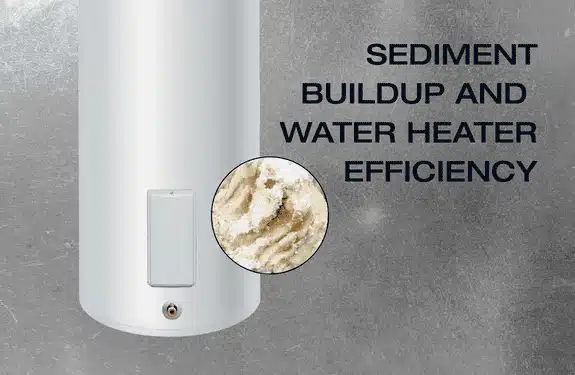
Depending on where you live, there’s a high likelihood that your water supply has its fair share of mineral content, including calcium and magnesium. You may not notice those mineral particulates in your drinking water, but over time they can accumulate at the bottom of your water heater tank. Sand, rust particles and other forms of debris can also contribute to this sediment.
While sediment buildup may seem harmless, it’s actually one of the most serious issues affecting household water heaters. Many water heater failures and efficiency issues can be traced back to sediment accumulation. For homeowners, it’s important to understand exactly how sediment affects water heater performance and what can be done to prevent it.
How Sediment Impacts Water Heater Performance
Sediment starts to accrue the first time you ever use your water heater. That’s because, with each use, you introduce a supply of water that’s bound to contain mineral content. When the water is heated, that mineral content dissolves and separates, but ultimately settles at the bottom of the tank.
Initially, this sediment will be so minor it won’t have any impact, but over time, the amount of sediment will increase. Ultimately, sediment buildup creates an insulating barrier between the heating source and the water in the tank, which means the unit must work harder and longer to produce hot water. In other words, sediment buildup makes your water heater decreasingly efficient.
Maintaining Maximum Efficiency
While sediment buildup is going to be an issue with any water heater, basic maintenance can help ensure peak efficiency. Refer to the maintenance section in your water heater manual for specific guidance on draining and flushing.
A licensed plumber can help as needed. Use our Contractor Directory to connect with professionals in your area who provide more information about water heater upkeep, as well as potential replacement.